

Ever wondered why some dogs seem perpetually hungry or if your cat is actually plotting your every move? 2025 brought us some fascinating answers. From decoding tail wags to sniffing out our stress, here are five scientific insights that pull back the curtain on our pets’ inner worlds.

1. Do They Dream of Electric Sheep?
Our feline and canine companions experience REM sleep, the phase clearly associated with dreaming in humans. What might they dream about? A prominent dream researcher suggests their dreams likely replay daily experiences—perhaps chasing a frisbee in the park or snuggling with their favorite human.

2. The Sniff Test for Stress
Dogs possess an incredible ability: they can not only detect cortisol (a stress hormone) in our sweat but also interpret it. Research led by Zoe Parr-Cortes, formerly a PhD student at the University of Bristol, found that smelling a stressed stranger’s sweat can make a dog more pessimistic in uncertain situations and may even curb its appetite. “Humans and dogs are social animals, and we have emotional contagion between us,” Parr-Cortes explained. This ability to sense stress within their social group could serve as an early warning system for potential threats.

3. Bored, Not Besotted: Decoding “Needy” Cats
Sorry, cat lovers—if your feline shadows you around the apartment or meows incessantly for attention, it might not be an expression of pure adoration. Veterinarians point out that this behavior is more likely a sign of under-stimulation, feeling cold, or simply heightened vigilance. Cats evolved to meticulously monitor their territory, so a closed door often triggers curiosity or anxiety. That cozy lap it jumps onto? It might be more about seeking a warm spot than seeking your affection.
4. The Genetics of the “Always Hungry” Dog
Does your Labrador always seem ravenous? Science has a specific answer. A quarter of Labrador Retrievers (and about two-thirds of the less common Flat-Coated Retrievers) carry a genetic mutation that makes them feel perpetually hungry, even on a full stomach. This trait disrupts the internal signals that tell them they’re satiated, leading to increased hunger and food motivation between meals. Interestingly, this is considered an ancestral trait from dogs that historically worked with fishermen in Canada, where a high drive for food reward would have been advantageous.

5. When a Curly Tail Changes the Conversation
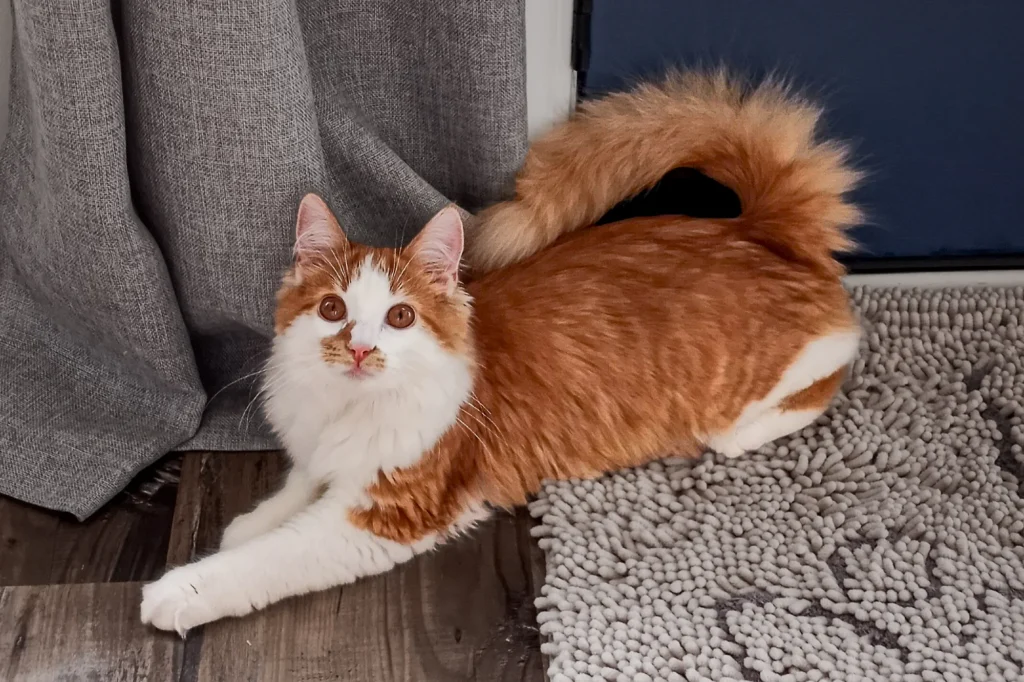
An unusual genetic mutation gives some cats a tail that curls over their back, creating a striking appearance. However, this cute quirk can hinder clear communication. A tail held straight up is a primary way cats signal friendly intentions to each other—a posture impossible for cats with this curly tail. To compensate, these felines likely rely more heavily on other body language cues like ear position, scent marking, and vocalizations. Research suggests that with enough exposure, cats speaking different visual “dialects” can learn to understand each other.